

UPDATED 12/31/08
NEXT UPDATE 1/10/09
SEE THE CATALOG!
Download demos, tutorials, examples, chapters, papers, and more! Catalog of Westgard QC Products & Services Lessons on BQC, BMV, Six Sigma and More! QC Applications CLIA and other Quality Requirements "Westgard Rules" What's New? The Essays of James O. Westgard Online Store Westgard Web Navigation Column
On the Blog: On the Blog:

Happy Holidays 2008 and a Hopeful New Year 2009

HbA1c for screening and diagnosis of diabetes?
Recent coverage of estimated average glucose (eAG) and the rise of HbA1c as the method for diagnosis of diabetes raises an obvious question: Are HbA1c methods and results of better quality than glucose methods and results? Dr. Westgard looks at the numbers.

High Reliability Testing: Reluctance to Simplify
In our next lesson on High Reliability, we talk about a deceptively simple principle: the reluctance to simplify. When everything about your organization is dedicated to streamlining and making things more efficient, how do you maintain the ability to know all the real complexity of your processes?

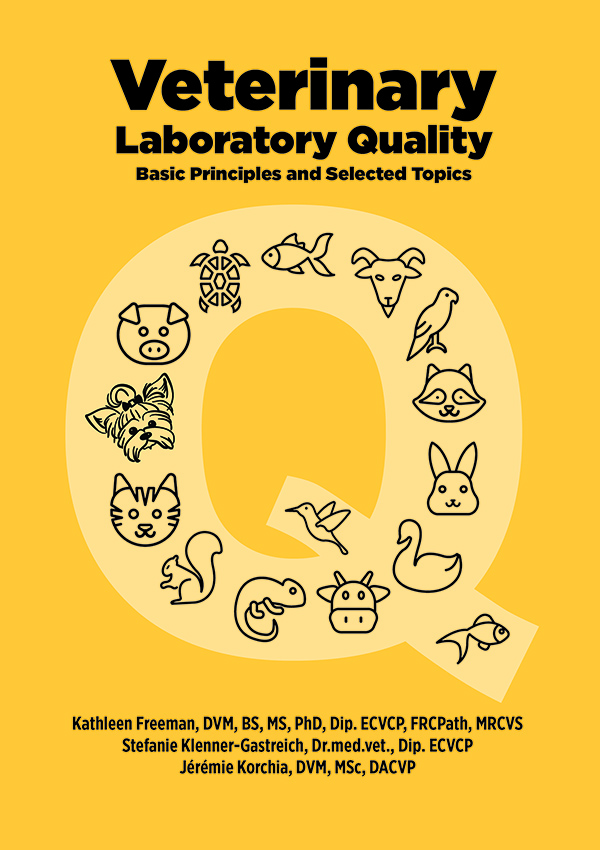
Quality Requirements for Dogs, Cats, and Horses?
In a new paper, two scientists perform a literature survey of the veterinary diagnostic literature and attempt to calculate basic quality requirements for common analytes - for the non-human species.

New Westgard Download: Sigma-metrics Tool
On September 4th, 2008, Dr. Westgard spoke as part of the AACC audioconference on "New Directions in Laboratory QC" - which was subsequently quoted in the Clin Lab News article on Risk and CLIA. We are pleased to make available Dr. Westgard's complete presentation, as well as two Sigma-metrics Charts and instructions on how to use them in QC Design.

Westgard Sigma Analysis: new HbA1c method
At the 2008 AACC/ASCLS convention, a poster was presented for a new direct enzymatic assay for %HbA1c. How does it stack up against HPLC and immunoassay methods? How do you judge a method when you've got multiple comparison methods and multiple quality requirements?

A brief introduction to EP 15 - interview with the CLSI committee chair, R. Neill Carey
We were fortunate enough to get R. Neill Carey, PhD, the chair of the CLSI EP 15 committee, to present and explain that new standard at the Chicago Method Validation workshop. He also contributed a chapter to the new Basic Method Validation manual on the same topic. But for those who have never heard of EP 15 before, we conducted a short interview with Dr. Carey. This short introduction to EP 15 may pique your interest in this new guideline.

Thinking about Three Sigma
In a previous lesson, we discussed some possible actions to take when the Sigma-metric for a method is higher than Six. But what about those methods with low Sigma-metrics? What do you do when Sigma analysis delivers bad news?

Thank you, Rochester

Thank you, Chicago!

Dr. Westgard at Abbott Park, Chicago

Surpassing Six Sigma: 7 Thoughts on Superior Quality
Recently, we've been seeing methods by some instruments that perform well beyond Six Sigma. What are the implications when a method is better than world class? Does this change how we should operate those tests?

Westgard Sigma Analysis: Abbott ARCHITECT c8000
At the 2008 AACC/ASCLS convention, Sten Westgard was a co-author on a study examining multiple instruments on multiple sites. When a large healthcare system has a lot of the same instrument, how do the instruments perform?

High Reliability Testing: Preoccupation with Failure
In the second lesson on High Reliability, the first principle of HROs is discussed. Preoccupation with failure sounds like a bad thing, so why is it a key behavior in highly reliable organization?

Westgard Sigma Analysis: POC hematology instrument
A recent evaluation paper in a prominent journal took a look at a new POC hematology instrument. They concluded that the performance was "within acceptable limits." When the bar is that low, what's the actual Sigma performance?

Time to Engage in Measurement Uncertainty
In the ongoing War of Words, it's time to hear another voice. Dr. Dietmar Stockl, an expert from across the Atlantic, provides us with a detailed essay explaining how measurement uncertainty can be useful to the laboratory - and even co-exist with Total Error.

The Blog is Back!
Yes, the Westgard blog is back. Regular visitors will remember that back in 2006, Westgard QC dipped its toe in the blog waters, but after a dozen or so postings, the blog went silent. Now it's back, with better features, improved commenting, and a new look. Here are a few of the recent postings:

Update on EP22, EP23 and "Alternate QC"
The search for a different way to do QC continues. And continues. Read the latest developments, from a meeting at the AACC/ASCLS convention of the CLSI committees on EP 22 and EP23.

We were happy to see the hundreds of people who visited the booth or attended the lectures given by Dr. Westgard and Sten Westgard. If you weren't able to attend the convention, you can find out quite a bit by reading our reviews and follow-ups from the show.

A different approach: High Reliability Testing
Lean, Six Sigma, ISO and Risk Management aren't the only Quality management systems out there. There's at least one other system called High Reliability Organiation (HRO) theory. A recent report details how HRO can help improve healthcare quality.

The Quality of Proficiency Testing
A recently-released report from the CDC dared to ask the big question: is Proficiency Testing effective? Not only that, it dared to recommend a significant change in the CLIA statutes.

Westgard Sigma Analysis: Roche cobas c311
At the 2008 AACC/ASCLS convention, there is a poster with performance data on the new Roche cobas c311. What's the Sigma of these new methods?

New Edition! Basic Method Validation
We're proud to announce the publication of the third edition of this essential laboratory reference. This concise guide to method validation has been revised, updated, and expanded. We've added new chapters covering ISO, CLSI guidelines, and Sigma-metrics. Download excerpts now and get an extra discount if you place an online order.

New Online Training in Method Validation
To coincide with the release of the third edition, the online training course in method validation has also been updated and expanded. New tools, new supplementary materials, even a streaming video presentation on the "Secrets of Method Validation." The most comprehensive course in method validation just got better.

When Quality depends on the company you keep
A recent report from the CDC identified a number of problems with current proficiency testing. Among those problems, the group SD quality requirement. What is it? Why is it a problem? What can be done about it?

Westgard Sigma Analysis: a POC multitest system
When a new POC instrument reports it has great precision numbers, is that all you need to know about performance?

CAP talks about ISO 15189:2007
Earlier this year, CAP announced that it would offer ISO 15189:2007 certification to laboratories by the end of this year. What does this mean for laboratories? Westgard Web asks the CAP ISO staff.

Biologic Variation Database: the 2008 update
Dr. Carmen Ricos and her colleagues have graciously provided us with the fifth edition of their biological variation database. New data, new analytes, and new desirable specifications - a most valuable contribution to the field.
See the update highlights
See the References
See the Reference List
See the Desirable Specifications for Imprecision, Inaccuracy, and TEa

Waiting on the FDA for alternate quality control?
Earlier this year, CMS held out hope that the FDA would create another option for quality control: Alternate QC (AQC). Later, the FDA said it couldn't do that right now, but that it remains open to the possibility. But, just how feasible is it for today's FDA to tackle a new clearance option?

Westgard Sigma Analysis: GHb and cobas 6000
This month we take a Roche cobas 6000, we apply the different analytical quality requirements for GHb and evaluate its performance. What requirements should you pick? What rules should you use?

The Skinny on QC? Are Quality Requirements Lean?
In light of the publication of the fifth edition of the Ricos et al biologic variation database, it's worth contemplating one question: what's the quality of quality requirements? In the parlance of the latest management trend, are quality requirements "Lean"?

What we can learn from World Class Methods
Over the past few months, Westgard Web has performed several Sigma analyses of Abbott ARCHITECT methods, all with superior results. We decided to go straight to the source and ask them what they're doing that produces this level of quality. Turns out, they're just doing all the things that we should be doing in the laboratory...

Clinical Chemistry Citation Classic (sub required)
In the March 2008 issue of Clinical Chemistry, Dr. Westgard tells the story behind the seminal 1973 paper by Westgard and Hunt on the "Use and Interpretation of Common Statistical Tests in Method Comparison Studies." This is the paper that laid the foundation for method evaluation/validation studies for laboratory tests.

New Year, New Store
We've updated and upgraded our online store. We're using Yahoo and Paypal to provide the store and payment functionality. See the thumbnail below to get an idea of what the store looks like, then Come check it out - at www.westgardqc.com - and let us know what you think.

2008: The Year of EQC, AQC, or no QC at all?
A recent audioconference explained how EQC, despite its dubious scientific validity, was no longer educational, but policy. The audioconference brought up the possibility once more that the FDA will provide a QC clearance option for manufacturers. Don't get your hopes up...

Sigma metrics of POC glucose instruments
Scientists at the Mayo Clinic performend an interesting study of multiple POC glucose methods to evaluate their performance. Using this valuable data, we apply Westgard Sigma analysis. Do you think there's world class performance at the point of care?

Evaluating GHb quality requirements
In the recent essay on Guidelines for GHb, a number of different quality requirements were discussed and proposed. So what's happening on the instrument? Taking an Abbott Architect c8000, we apply the different analytical quality requirements and evaluate its performance.

The Quality of Glycated Hemoglobin (GHb)
Part Four of Dr. Westgard's series on the War of Words in the Laboratory shows the impact of lax standards on one of the most important tests in the laboratory. Guidelines for GHb have been issued in 2002 and 2007 - but are they on target? Is there any evidence in this evidence-based medicine guideline?

Equivocal QC: Coming to a Lab near you
Despite universal complaints about the CMS "EQC" options, despite the CMS admission that "we blew it", and despite a complete lack of scientific validity, these policies are coming to a laboratory near you. See how it's going to happen...

Guest Essay: Frequency of QC and Patient Safety
We're delighted to present this guest essay from Dr. Kent Dooley, an astute reader who has done serious thinking about what patient safety implies for quality control. If labs are serious about patient safety, should they be reducing their quality control?

Sigma metrics: Abbott Architect c16000
Using 2007 AACC poster data, we take another look at Abbott's newest, biggest chemistry instrument. Does the site evaluation corroborate the manufacturer's evaluation?

A War of Words in Laboratory Terminology? Part III
Looking beyond the terminology of Trueness and Uncertainty, Dr. Westgard examines the intended uses and customers of these terms.

A War of Words in Laboratory Terminology? Part II
Trueness. Uncertainty. Accuracy. Precision. Why are there so many definitions for the same terms? Dr. Westgard traces the history of metric concepts in the clinical laboratory. See when and where ISO, IFCC, and CLSI began introducing new terminology into the lab.

A War of Words in Laboratory Terminology?
Have we reached the point where a "total allowable error" is no longer acceptable? Shall we stop defining how good a test should be - just so we can insist that tests shouldn't be in error at all? The ISO terminology of trueness and uncertainty and its passionate advocates might be saying just that.

"But...is it really out?"
We get a lot of email at Westgard Web, and a lot of it asks questions about specific situations where the theory of QC might say a control is out, while the "real world" laboratory believes that it's actually "in." This essay discusses why and where there are the differences between the theory of QC and the practice of QC.

Ten ways to do the Wrong QC Wrong
Taking a cue from the previous, we look at a "Top Ten" list of real world QC scenarios and see how laboratories are getting their QC wrong.

Why We Write
After ten years of Westgard Web and more than 100 essays written, Dr. Westgard reflects on the reasons for writing for the Laboratory Professional audience on the Internet.

New "Westgard Rules" worksheets?
If the rules are 25 years old, why are we offering "new" worksheets? Well, it came to our notice that the current worksheet graphically describes the "classic" multirules, but no similar worksheets exist for our other recommended multirule combinations. Now we've remedied that - in one download, you can see the "classic" rules, as well as modern recommendations for instruments with 2 controls and 3 controls per run.

"Westgard Rules" at 25 years - an audio download
By some accounts, the "Westgard Rules" turned 25 years old in 2007. In celebration of this anniversary, the webmaster interviewed Dr. Westgard by phone about the past, present, and future of multirules and QC. ( Please note this file is 13.5 MB. Our apologies for the quality of the recording - Dr. Westgard was on his way to South Africa at the time). In the future, we plan on offering regular "podcasts" for your convenience.

Good Laboratory Practices, Part II
Some practical advice on the proper set up, implementation and use of QC, as well as a discussion of "standard deviations" from Good Laboratory Practice.

Good Laboratory Practices for Statistical QC.
Did you know the ASCP held a teleconference this year on " A How-Should-I guide to Laboratory Quality Control." They cited the lack of "Good Laboratory Practice" standards for QC in the laboratory. If only they had looked at the recent CLSI standards, they would have found some. Dr. Westgard explains the new C24-A3 standard and how it can lead you to good laboratory practices in quality control.

A Multichemistry analysis: 16 years later
The unspoken assumption in laboratories and diagnostics is that we're getting better all the time. Our new systems are better than our old ones. But does the data show this? Just looking at a Westgard et al. paper from 1990 and a collection of recent instrument performance data provides a challenge to this thinking.

Are "Westgard Rules" efficient and cost effective?
David Plaut, longtime friend of Dr. Westgard, recently collaborated on a multisite evaluation of the implementation of "Westgard Rules" in the laboratory. The poster, originally at the 2005 AACC conference, is now available in an expanded format online. And we thank David for it.

The War on Error: Complete Victory or a Long, Hard Slog?
As part of our continuing series on Patient Safety concepts, we explore the nature of Error, its varieties and occurences in the lab, and consider the proposed changes in QC through the perspective of Swiss cheese. No. We're not kidding. Swiss cheese.

Patient Safety: Can we get there from here?
Our second lesson on Patient Safety examines the traits of an ideal safety culture - and compares current laboratory practices to those ideals. Does "lab culture" measure up to "safety culture"? What prevents us from reaching the ideal safety culture?

What are the risks of Risk Management?
Risk Management is coming to laboratory medicine, possibly to a regulation near you. As we learn about the principles, tools, and processes of RM, let's also take time to evaluate the risks.

Patient Safety: What's the culture in the lab?
You may already know that Patient Safety is an important "new" concept in healthcare. It's a hot topic in articles, at conferences, and new institutions have been created and new laws have been passed just to promote Patient Safety. So where does the lab fit in?

The Quality of PT Sigma metrics
In our series on the Quality of Laboratory Testing, we've been looking at as many PT groups as possible. But the questions arises, are some PT group estimates better than others? We take a closer look at CAP PT Sigma metrics.

Multistage QC Design with EZ Rules 3
See how EZ Rules 3 makes Multistage QC Design possible. The most advanced QC techniques are easy to a sneak peak at a new version of EZ Rules we'll be releasing soon. This new version combines the best features of Validator and EZ Rules, and adds some new twists as well.

Search


Basic Method Validation, Third Edition
New! Basic Method Validation, Third Edition

Six Sigma, 2nd Edition

Assuring the Right Quality Right

EZ Rules© 3

CLIA Final Rules for Quality Systems
CLIA Final Rules

Nothing but the Truth about Quality
Nothing but the Truth

Basic QC Practices, SECOND EDITION
Basic QC Practices Manual
SECOND EDITION!!

Basic Planning for Quality Manual
Basic Planning
for Quality manual

QC - Levey-Jennings Charts

QC - Back-to-Basics

QC - The Idea 

QC - The Multirule Interpretation


CLIA Final Rule Articles

An Open Letter on Risk Management and "EQC"
Numerous CLSI committees are formulating the standards for QC for the Future right now. In light of recent evidence that analytical quality is not as good as most assumed, this is an open appeal to those decision-makers and deciders all across the country to remember that statistical QC is a critical tool for the laboratory.

CLIA manual Now available
To address the CLIA Final Rule and Interpretive Guidelines, Dr. Westgard, Dr. Sharon Ehrmeyer, and Dr. Teresa Darcy have written a new manual covering all the critical changes and new lab responsibilities. You can preview the first two chapters of this manual available free.

Is this the end of EQC 1, 2, 3?
The 2005 news on Equivocal QC was not supportive of options 1, 2, or 3. Professionals, manufacturers, even the regulators themselves are unhappy. We're pleased to provide a summary of what was said and by whom, as well as what that means for you. And find out if these options are now optional - or simply obsolete.

Back to the Future: CLIA EQC Option 4
A recent meeting held by the Institute formerly known as NCCLS proclaimed EQC as the "QC for the Future", then promptly proposed a new option that would circumvent the current options. Even more interesting, the new option comes out of CLIA's past...

Bah, Humbug! A look back at 2004
This was quite a year, full of high points and low points. Perhaps the biggest issue in US labs was EQC. In the spirit of Jonathon Swift, we make a modest proposal.

Analysis of the Rationale for "Equivalent QC"
In presenting a scientific basis for "Equivalent QC", CMS cites the NCCLS documents M2-A. What is this document and how does it provide the rationale for "Equivalent QC"? Dr. Westgard investigates.

A Rationale for "Equivalent QC"?
Traffic on the AACC POC listserv has been fast and furious lately. An open letter was posted questioning the scientific rationale behind equivalent QC procedures. CMS has responded. The complete letter and response are posted here for your review.

Is the CLIA Final Rule the Final Word?
On April 28, 2004, the AACC held its audioconference on “CLIA’88: Recent Changes, Future Directions,”. During that conference, the speakers were asked to respond to "our" position on "equivalent QC procedures." To respond to those responses, we want to clarify our concerns about "Eqc."

Testing Equivalent Quality: A Better Way
CMS has created "equivalent QC", but the regulations really only allow "equivalent quality testing." This difference is important - and if "Eqc" is here to stay, finding the equivalent quality in testing is the only way to find a real solution. Finding that quality can be done, and done simply, using Sigma Metrics.

Lies, Damn Lies, and "Equivalent" QC
When the Interpretive Guidelines came out, a new practice called "Equivalent" QC was introduced. Just what is it equivalent to? Well, if it was applied to fire safety, CMS would be telling you to turn off your smoke detectors.

More on CLIA and Quality-Less Compliance
We've covered the specifics of the CLIA Final Rule and the Interpretive Guidelines, but now it's time to take a look at the Big Picture. Why did it take over ten years to get the CLIA Final Rule? Why did manufacturer's QC clearance go by the wayside? Why did we end up with "electronic QC" and "equivalent QC", when our testing and patients need more QC?

CLIA Final Rule: The Interpretive Guidelines
On January 12th, CMS released the Appendix C of the State Operations Manual. These are the Interpretive Guidelines for the CLIA Final Rule, and they contain some major changes in how the CLIA regulations will impact the laboratory. Get the first review of these guidelines from Dr. Sharon Erhmeyer and Dr. Westgard.

CLIA Final Rule: "Equivalent" QC Procedures
The Interpretive Guidelines on the final CLIA Rule contain a startling reduction in the requirements for QC. Dr. Westgard explains what this new practice is, and why it's fatally flawed.

CLIA Final Rule: Appropriate QC Procedures
If we accept that "equivalent" qc procedures are not equal... If we want to assure quality rather than comply with regulations... If we want to do the right QC, not the least QC... What is the appropriate QC to do? And how do you determine it?

CLIA Final Rule: Method Validation Process and Procedures
Starting on April 24, 2003 all non-waived laboratory methods must be validated. This includes methods that were previously exempted from validation. In light of these new responsibilities, Dr. Westgard reviews the process and procedures of method validation.

CLIA: Statistical sense, sensitivity, and significance
Given the new CLIA Final Rule method validation responsibilities, laboratories have to become smarter about their use of statistics. Dr. Westgard examines the best uses and interpretations of statistics for method validation. Some current practices are not as good as you might think.

CLIA: What does it mean for Method Validation?
Dr. Sharon S. Ehrmeyer provides more analysis of the new CLIA Final Rule. Now that there are only 2 categories of tests - waived and non-waived - what experiments must be performed on non-waived tests? JCAHO and CAP requirements are also discussed.

CLIA: Perplexity about Personnel and Complexity
Dr. Sharon Ehrmeyer, PhD, well known for her grasp of CLIA and regulatory affairs, offers us her view of the new CLIA rules. In particular, she clarifies how these new rules will impact personnel requirements and qualifications in the laboratory.

Maryland General Hospital Scandal

Unannounced Inspections
Across the US, laboratorians are growing pale. Many of them will no longer know the exact date of their inspection. But will "surprise" inpections improve quality?

GAO recommendations: the agencies respond
The final GAO report contained not only recommendations, but preliminary responses of those affected by the recommendations. See what CMS, CAP, JCAHO, and COLA had to say to the GAO when they saw the first draft of the report.

GAO recommendations: good, bad and irrelevant
As a result of the GAO investigation, there are 13 recommendations being made in their report. We've analyzed each point to determine if they're useful, bizarre, or just irrelevant.

GAO report on CMS is out
Remember Maryland General? Part of the outcome was a Congressional request for a GAO (Government Accountability Office) investigation of CMS and its related agencies. Well, the report is finally out. And it's not kind.

Blowing the Whistle on the Tip of the Iceberg
The Maryland General lab is back in compliance. So we can breathe easier, right? Actually, no. Now three other labs have been found deficient in Maryland. Why are more labs having problems? Why is this scandal still growing?

Maryland General, Part V: Tip of the Iceberg?
Was the scandal at Maryland General Hospital a case of a "few bad apples" or is just the tip of the iceberg? New studies and analysis...

Maryland General, Part IV: Inadequate Inspections
One of the most dramatic revelations of the Maryland General Hospital scandal was the failure of inspections to uncover the problems in the lab. How did the inspections fail, and can new inspection regimes solve this?

Hearings, Part III: Broken Windows at Maryland General Hospital
There are two questions that all laboratory professionals are asking about the scandal at Maryland General Hospital: How could it get this bad? and How could it take so long to discover the problem? Dr. Westgard and Sten Westgard try to answer those question, and pose an even more important question.

Hearings on Untruth and Unquality, Part II: Facts
For those of you who haven't been able to follow the scandal at Maryland General Hospital, here's a recap of the laboratory deficiencies, errors, and catastrophes - plus details on the congressional hearings on this issue.

Hearings on Untruth and Unquality, Part I: Cracks
Dr. Westgard comments on the recent reports involving Maryland General Hospital and laboratory errors. The first in a series of articles on this developing story.


Articles on ISO

Quality Cocktail: ISO, Lean, and Six Sigma
What are the new approaches to quality management? How do they work? Do they have anything in common with each other? If we combine them, do we have a "drug cocktail" for the problems that plague healthcare management? These are the questions we brought to a recent AACC EduTrak. Did we get answers? Read on...

ISO 15189: Policies and Procedures
In conjunction with Dr. Westgard's lectures, Mr. Greg Cooper, head of Clinical Standards and Practices at Bio-Rad, made presentations on ISO 15189. We are grateful to him for allowing us to make that presentation available on this website as well.

ISO-4: 14001:2004
Can labs evolve into centers of sustainable development? ISO thinks so. See their new standards on Environmental Management Systems (EMS).

ISO-3: The new ISO 15189:2003 standard
There's a new ISO standard in town - 15189:2003. This one specifically addresses medical laboratories and the requirements for quality and competence. Our guest authors introduce the new standard and compare it to the existing ISO standards.

ISO-2: Quality Management Systems
In their 2nd article, Daniel Marques Périgo R.Ph. and Rogério Rabelo M.D., Ph.D. explain the ISO principles of good quality management systems and their application to clinical laboratories.

The Gospel According to ISO
As standards from the International Standards Organization gain traction here in US healthcare, it's worth taking a moment to analyze and review the ISOs . Dr. Westgard introduces a new series of guest articles.

ISO-1: Basics and Perspectives
Daniel Marques Périgo R.Ph. and Rogério Rabelo M.D., Ph.D. explain the concepts of ISO. Learn what you can expect (and not expect) if and when your organization embraces ISO.

ISO GUM: An Evaluation
What is GUM? Well, it's not something you chew. It's the ISO Guide to Uncertainty in Measurements. Recently, a panel of seven Scandinavian scientists examined GUM and evaluated its usefulness. We are pleased to share their findings.


Articles on Sigma Metrics

From Method Validation to Sigma metrics: Evaluating a new instrument
One of the papers at the AACC poster session provided us with a great set of data on CV and bias for a new chemistry instrument. From that data, we can evaluate the Sigma performance and the QC required by the instrument. We can even compare the new instrument with Sigma metrics from other competing instruments.

From Precision Claims to Sigma Metrics
When you buy a new diagnostic device, the manufacturer is required to provide you with performance claims. How useful are those claims? If we convert them into Sigma metrics, can we get even more information? See how claims can become metrics, and what the results will mean.

From Precision Claims to Sigma Metrics:
High Volume Hematology Analyzers

Let's put theory into practice. What is the performance of high volume hematology analyzers, based on their precision claims? A survey of instruments sure to pique your interest.

From MV to Six Sigma: A chemistry analyzer
Continuing in our series on translating method validation studies into Six Sigma metrics, we examine a Roche Integra 400+ chemistry analyzer, with data provided by St. Joseph Hospital in Houston, Texas. The results are stunning.

From Method Validation to Six Sigma
How can you get a definitive conclusion on the performance of a new instrument, based on just the performance claims provided by the manufacturer. With a fusion of QC Design, Method Validation, and Six Sigma, you can translate performance claims into Six Sigma Metrics. This lesson shows you how, and provides all the calculators you need!

From MV to Six Sigma: A POC chemistry analyzer
Now that we know how to translate the manufacturer's performance claims into Six Sigma metrics, let's take a hard look at some real-world data. With a performance study supplied by a "near-patient" chemistry anlayzer, we find out just how good (and how bad) performance of tests are when they're at the POC.

Remarks at the G2 Conference: "No Lab Left Behind"
On September 30th, 2004, Dr. Westgard received the 2004 Leadership Award for Lifetime Achievement from the Washington G2 Lab Institute on September 30th. His thanks and remarks upon receiving this honor are now available.

"Westgard Rules": Best Practices
So we've catalogued some of the worst abuses of "Westgard Rules." What about the best uses? What's the best way to use "Westgard Rules" - When, Why, How and Who, too?

"Westgard Rules": Abuses, Misuses, and In-excuses
WARNING! You may not want to read this article. It's a sobering list of all the common mistakes made by manufacturers and laboratories when they implement the "Westgard Rules." As it turns out, when your software or instrument or LIS claims to have "Westgard Rules," it might not be true or even useful.

$aving the Cost$ of Poor Quality
Poor QC practices are wasting money in your laboratory right now. Dr. Westgard shows how to identify, quantify, and eliminate the wasted time, effort, and resources spent on repeat runs, repeated controls, and poor patient care. Six Sigma Cost Worksheets are included and can be downloaded for your use.

It's not Rocket Science: Lessons from the Shuttle Disasters
The loss of the Columbia and Challenger Shuttles were not just technical failures - they were also a result of a culture at NASA that devalued safety. As we look at the Shuttle failures, how can we be sure that labs aren't doing the same thing?

Internal Quality Control: A Free Download
In the November 2003 issue of the Annals of Clinical Biochemistry, Dr. Westgard presented a paper titled Internal Quality Control: planning and implementation strategies. This is a concise introduction (or refresher) to the theory and practice of QC. And by the generosity of the publisher, you can download this paper free.

A Six Sigma Method Decision Chart
We are happy to make available an upgrade to our free Method Decision Chart. Now this spreadsheet gives you an instant Six Sigma metric of your method performance. And special thanks to the contributor and creator of this spreadsheet, Alex Bragat.

Find out how you measure up! There are three Six Sigma calculators here to help you determine the Sigma-metric of your tests:

Six Sigma Calculator

Quality Planning Worksheet

Normalized OPSpecs Charts

Online QC Tools

Online Method Validation Tools

A "Westgard Rules" Worksheet

The Basic QC Calculators


WESTGARD QC promotes the latest news, education, and tools in the quality control field. Our goal is to bring tools, technology and training into today's healthcare industry -- by featuring QC lessons, QC case studies and frequent essays from leaders in the quality control area. This is also a reference source for quality requirements, including CLIA requirements for analytical quality. This website features the best explanation of the Multirule ("Westgard Rules") and how to use them. For laboratory and healthcare professionals looking for educational and reference material in the quality control field,
THIS IS THE WEBSITE FOR YOU! 
This website is best viewed by FireFox, Opera, or Netscape Navigator 7.0, or better.
To view the Javascript functions (scrolling text, calculations, etc.), you must have at least Netscape 3.0 or better.

Copyright © 2008. All rights reserved.
Westgard QC, 7614 Gray Fox Trail, Madison, WI 53717
Call 608-833-4718 or e-mail westgard@westgard.com

A Message from JOW
QC Lessons | QC Applications | Questions | Multirule
CLIA Requirements | What's New? | Catalog | Demo Download
Home  | Glossary | SEARCH | ARCHIVES | Links | Feedback
